Editor's note: The markets and our Chaikin Analytics offices will be closed Monday, May 25 for Memorial Day. So we won't publish our Chaikin PowerFeed e-letter.
We hope you enjoy the long weekend. And you can expect to receive your next issue on Tuesday, May 26.
Researchers at Kaspersky Lab made a horrifying discovery on June 27, 2017...
Malware was ripping through Ukraine's economy. And it wasn't like anyone expected.
The massive cyberattack started earlier that day...
Computers all over the country reset to install an update. But once they powered back on, the devices didn't boot up.
Instead, they displayed red text on a black screen saying that important files were "encrypted."
The message demanded a ransom of $300 worth of bitcoin to restore users' locked data.
Now, the cybersecurity world had seen this trick before...
A ransomware called "Petya" followed a similar script the previous year. With Petya, hackers locked users out of Microsoft devices until they got a similar ransom payment.
As this new malware spread across Ukraine in 2017, some businesses just paid the $300 ransom. It wasn't a huge amount. And they just wanted to go on with their workday.
They waited for the hackers to give further instructions. But nothing ever came.
That foreshadowed the Kaspersky Lab researchers' discovery...
The malware was not Petya. It wasn't even ransomware.
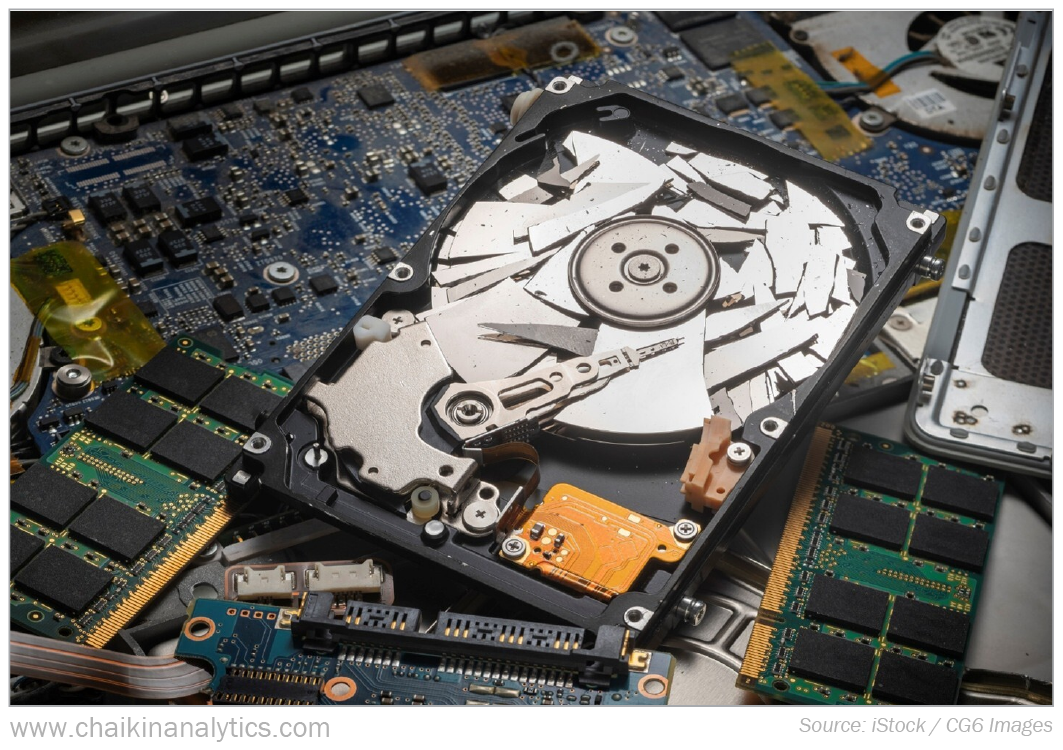
Rather, it was a "wiper." This type of program destroys data instead of taking it hostage.
The Petya-like screen intentionally misdirected cybersecurity firms. That way, the malware had plenty of time to spread before anyone realized what was happening.
The researchers at Kaspersky Lab dubbed the virus "NotPetya." And as information-security expert Thaddeus Grugq explained in a blog post on the day of the hack...
Although there is significant code sharing, the real Petya was a criminal enterprise for making money. This is definitely not designed to make money. This is designed to spread fast and cause damage.
NotPetya took out 10% of all Ukrainian computers. And it didn't stop there...
When the Kaspersky Lab researchers exposed NotPetya, they estimated that the malware had infiltrated about 2,000 organizations. It knocked out computers in more than 60 countries worldwide.
The victims included pharmaceutical giant Merck (MRK), global shipping leader Maersk, and the nuclear monitoring stations at Chernobyl. Overall, the U.S. government estimated that the cyberattack caused roughly $10 billion in damages worldwide.
Put simply, it became one of the most destructive attacks in cybersecurity history. And it exposed a massive defensive hole that persists in IT to this day...
What happens when security can't see inside its own system?
Researchers estimate that most successful cyberattacks involve lateral movement. In other words, hackers infiltrate and then strike from computers within the same network.
Even worse, artificial intelligence ("AI") is making hacking faster and easier than ever. So that's a big deal for cybersecurity as we look to the future...
The Power Gauge Is Now 'Bullish' on Two Cybersecurity ETFs
Cybersecurity leader CrowdStrike (CRWD) noted an 89% increase in AI cyberattacks last year. The average speed to a lateral attack was 29 minutes. That's nearly two-thirds faster than the year before.
In short, lateral cybersecurity will prove critical in the age of AI.
Wall Street's biggest investors know this. And our system just flagged a "bullish" flip on two cybersecurity exchange-traded funds ("ETFs")...
I'm talking about the First Trust Nasdaq Cybersecurity Fund (CIBR) and the Amplify Cybersecurity Fund (HACK).
Both ETFs struggled at the start of 2026. The Anthropic-fueled "SaaSpocalypse" among Software as a Service ("SaaS") stocks sent shares of these companies plunging.
Of course, both CIBR and HACK are full of software stocks. That's why the sell-off took a toll on the funds.
At the start of May, both CIBR and HACK got "bearish" ratings from the Power Gauge. But a recent surge of "smart money" from Wall Street sent cybersecurity stocks soaring.
On May 18, the Power Gauge changed its mind on these funds. It issued a "bullish" rating for the two ETFs. And that's still the case today.
However, the recent surge for both CIBR and HACK also sent the funds into "overbought" territory.
Put simply, we may see the share price of these ETFs dip before the next leg higher.
But no matter what happens in the short term with CIBR, HACK, and related stocks...
Keep your eye on the cybersecurity industry going forward.
The evolving threat of cyberattacks brings the need for new, innovative solutions. The importance of powerful cybersecurity is a big, long-term trend.
And as always, here at Chaikin Analytics, we'll use the Power Gauge to help spot these innovative companies.
Good investing,
Pete Carmasino